My Past Appearance on Vet S.O.S. - Operation Start-Up
- dougkatz8
- May 14
- 2 min read
"You don't solve a problem until it's a problem — until it's an aspirin and not a vitamin."
That realization changed the direction of my life more than I understood at the time.
Like many people, I spent most of my life identifying as capable. Army service, athletics, business, building, problem-solving — I saw physical capability as normal, stable, and largely permanent. But over time, injuries, wear, surgery, and age began forcing a different conversation. Not all at once. Gradually.
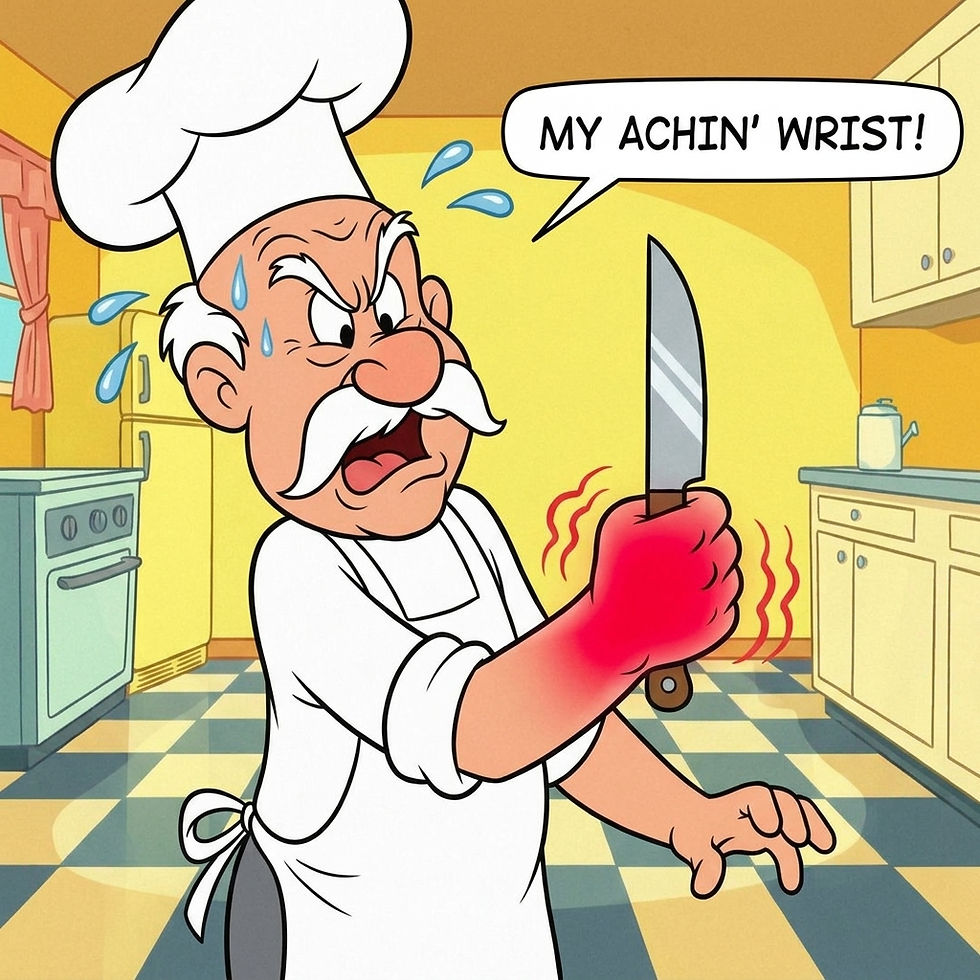
The interesting thing is that most people don't think of themselves as "disabled" when this starts happening. They think: my shoulder hurts, my grip strength is down, my balance isn't what it used to be. Cooking is getting harder. I fatigue faster. Stairs are becoming a problem. They don't see disability. They see inconvenience.
But the body doesn't care about labels. Tasks either align with your capabilities under certain conditions — or they don't.
That realization ultimately became the foundation for the Ability Curve.
The Ability Curve is built around a simple idea: ability is not binary. It's a continuum. Our capabilities shift constantly across age, injury, fatigue, stress, recovery, environment, and circumstance. Yet most products, systems, workplaces, and expectations are still designed around a fictional "fully able" baseline. That mismatch creates unnecessary friction everywhere — in the workforce, in caregiving, in kitchens, in leadership, in design, in everyday life.
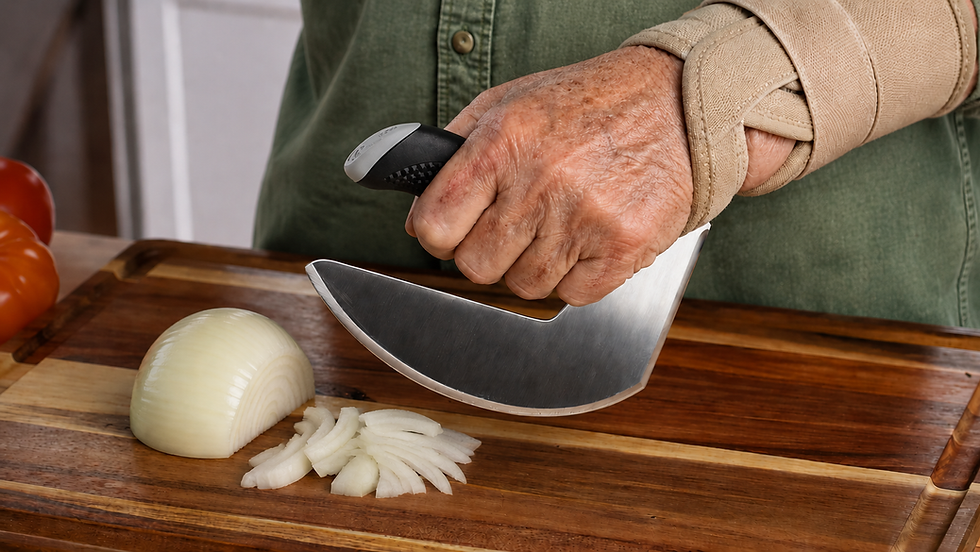
What began for me as an attempt to solve my own problems with cutting and cooking eventually evolved into a much larger question: what happens when we stop designing for an imaginary average person and start designing for reality?
That question now sits at the center of my speaking work — covering the Ability Curve, adaptive and universal design, workforce capability, aging and independence, ADHD and high-variance performance, and leadership through human variability.
I also want to acknowledge and thank my friends at VET S.O.S. – Operation Start-Up. A great deal of this thinking sharpened while I was participating in that accelerator and learning how to better articulate what we were actually building.
Sometimes innovation starts with a product. Sometimes it starts with pain. And sometimes it starts with finally asking a better question.
If this perspective resonates with your organization, conference, or audience, I'm available for keynote talks, workshops, podcasts, and speaking engagements focused on the Ability Curve, adaptive design, ADHD, workforce capability, and human-centered innovation.
Learn more at douglasmkatz.com
Comments