top of page
Keynotes · Consulting · Advisory | ADHD, Ability, Leadership & Organizational Dynamics
The Variance
On ADHD, Ability, and the World We Move Through
Search


dougkatz8
Sep 110 min read


dougkatz8
Sep 40 min read


dougkatz8
Sep 40 min read


Ability Isn’t Who You Are — It’s What You’re Doing
In the Army, we didn’t define people by their limitations. We evaluated ability through a clear framework: Task, Condition, and Standard. Task: What needs to be done Condition: The circumstances under which it must be done Standard: What success looks like This approach was clear, objective, and specific. It shaped how I think about ability today — and it reveals a fundamental flaw in how society operates. The Problem with Labels Most of society doesn’t work this way. We assi
dougkatz8
Sep 23 min read


Tremors and Kitchen Independence: Reclaiming Control in the Face of Involuntary Movement
This is the third article in a series that I will be publishing that addresses specific conditions and how NULU addresses them to restore or provide independence in the kitchen. For many living with tremor-related conditions—such as Essential Tremor, Parkinson’s Disease, or Multiple Sclerosis—the kitchen can become a place of profound frustration. The very tools designed to help us nourish ourselves often become the most difficult to master. When your hands shake, the precisi
dougkatz8
Aug 245 min read


Vision Impairment and Kitchen Independence: Safe Cutting Strategies for the Blind and Low-Vision Community
This is the second article in a series that I will be publishing that addresses specific conditions and how NULU addresses them to restore or provide independence in the kitchen. For many people living with vision impairment, the kitchen can feel like a landscape of hidden risks. The simple act of preparing a fresh meal—something that should be a source of health and autonomy—often becomes a source of anxiety. When you can’t clearly see the edge of a blade or the position of
dougkatz8
Aug 205 min read


Carpal Tunnel Syndrome and Kitchen Independence: What You Need to Know (And What Actually Helps)
This is the first article in a series that I will be publishing that addresses specific conditions and how NULU addresses them to restore or provide independence in the kitchen. If you've recently been diagnosed with Carpal Tunnel Syndrome — or if you've been living with it for years — you already know the frustration. It's not just the pain. It's the moment you realize that something as simple as chopping vegetables has become something you dread. Or avoid entirely. You're n
dougkatz8
Aug 196 min read
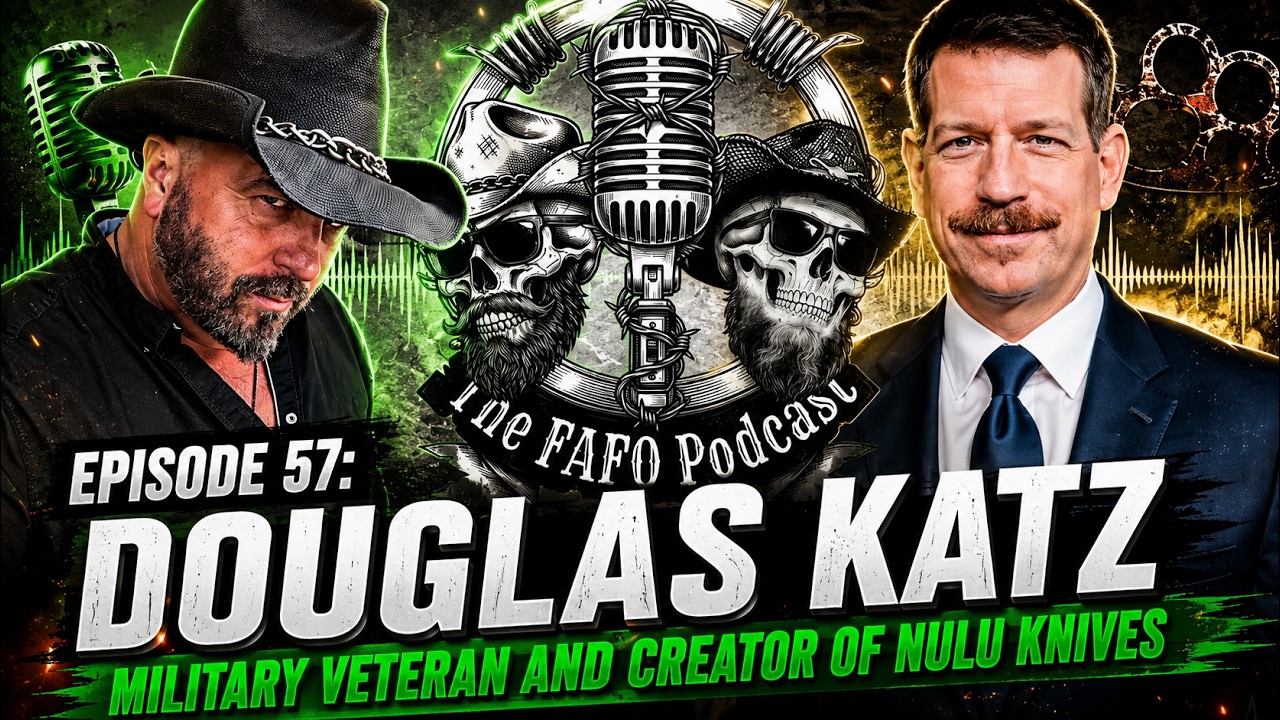
My Recent Appearance on The FAFO Podcast with BD Storm
This article is based on my appearance on the FAFO Podcast. Each section is anchored with timestamps so you can jump directly to the moments most relevant to you — whether you are a caregiver, a disabled cook, a knife enthusiast, or an entrepreneur. The Military Mindset That Made NULU Possible Jump to: [0:24 – 5:15] I did not come from a military family. My path to West Point was almost accidental — guided by a sharp-eyed school counselor who pointed me toward the service aca
dougkatz8
Aug 139 min read


My Recent Appearance on Your World Of Creativity with Mark Stinson
I recently joined Your World of Creativity with Mark Stinson as part of a roundtable discussion on a question every creative person eventually faces: what keeps you moving forward when life doesn't go according to plan? Rejection, uncertainty, financial pressure, health setbacks, a plan that just falls apart — every creative person hits a wall at some point. What separates the people who keep creating, leading, and growing from the ones who stall out isn't luck. It's resilien
dougkatz8
Aug 61 min read


My Recent Appearance on Born Before The Algorithm with Victory Igberase
I recently joined Victory Igberase for a great discussion on adaptive innovation but we covered a good bit more. Enjoy the interview.
dougkatz8
Aug 61 min read

Character as the Currency: My Recent Conversation on Innovators Unveiled
On Independence as Dignity, Why Character Is the Word I Keep Coming Back To, and Why the Best Legacy Is Anonymity in Widespread Use I sat down with A.D. Edwards on Ingleside Reviews: Innovators Unveiled — a masterclass-style show on Bravehearts TV that goes beyond titles and success stories to explore the deeper journey of the people building ideas that change lives. A.D. structured the conversation in chapters, which forced me to slow down and go deeper on questions I don't
dougkatz8
Jul 2224 min read


Beyond the Handle: Why Most "Ergonomic" Knives Still Fail Arthritic Hands
Part 2 of a 2-part series on adaptive cutting solutions for arthritis and reduced grip strength Abilities Expo 2026. We saw literally hundreds of people at our booth and we heard the same sentence probably fifty times a day. "Oh, a rocker knife. I have one of those." It was a reflex. People would walk up to the booth, see the silhouette of the NULU, and their brain would immediately categorize it based on the limited terrain of the adaptive equipment market. They’d see a curv
dougkatz8
Jul 2110 min read
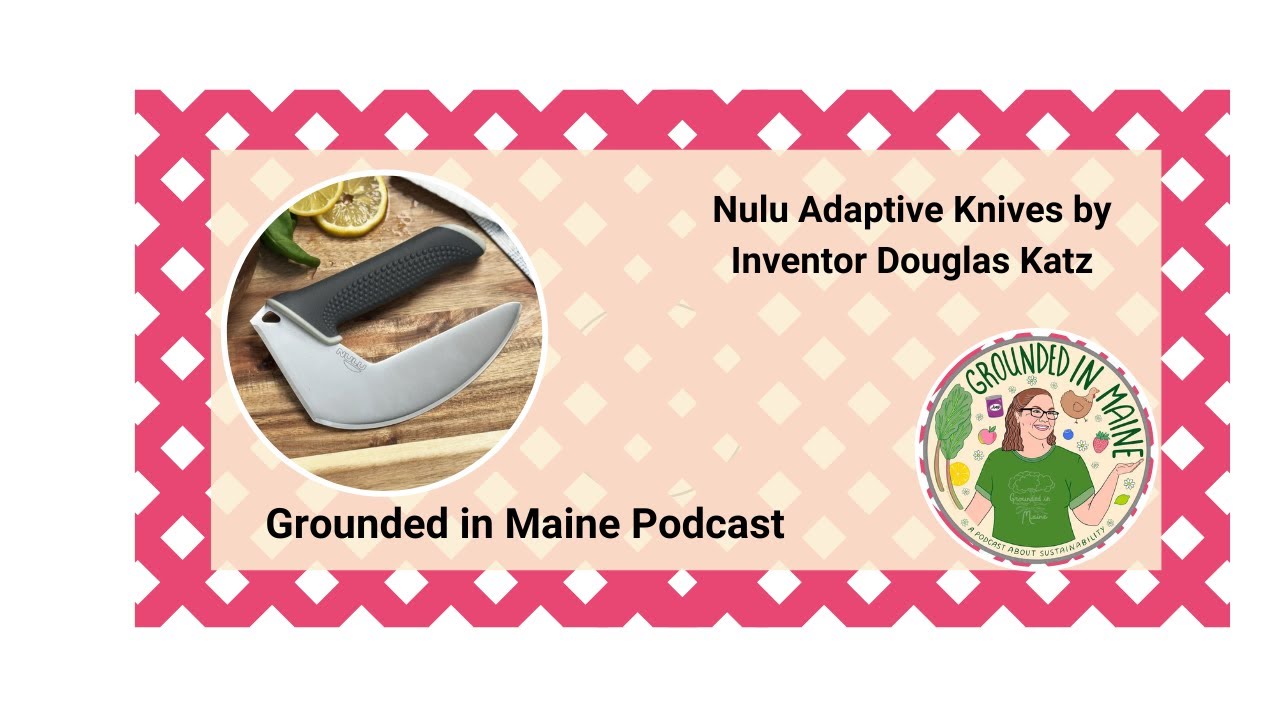
Radical Acceptance and the Ability Curve: My Conversation on Grounded In Maine
On Killing the Death Grip, Why Adaptive Design Isn't Charity, and Why the Cool Kids' Knife Should Be an Adaptive One I sat down with Amy Bolduc on Grounded In Maine — a warm, community-rooted podcast that explores lives lived with intention — for a wide-ranging hour-plus conversation that started with the meaning of NULU and wandered through the science of the kinetic chain, the ableism inside the disability community, the DARPA-style path for adaptive innovation, and why I w
dougkatz8
Jul 2019 min read

The 360-Degree Pivot: My Conversation on Behind the Numbers
On Perseverance as the Boat and Lessons as the Wake, Why We Went Back to Adaptive, and Why the Over-50 Team Is My Trade Secret I sat down with Dave Bookbinder on Behind the Numbers — a show that goes beyond the data to explore the people, stories, and insights that drive business success. Dave is a business valuation expert and best-selling author, which meant the conversation kept snapping back to the questions founders actually need to answer: how do you scale responsibly,
dougkatz8
Jul 2016 min read

Kinetic Chain and the Ability Curve: My Conversation on The Chronic Truth Podcast
On Cutting Without Grip, Why Kimberly's MS Diagnosis Made Her a Perfect Product Advisor, and How Adaptive Design Serves Anyone Who's One Second From a Diagnosis I sat down with Kimberly Nash on The Chronic Truth Podcast — a show built specifically for people navigating chronic illness diagnoses and searching for community and practical answers. Kimberly was recently diagnosed with MS and is losing fine motor control in her hands. She's exactly who NULU was built for, and our
dougkatz8
Jul 2014 min read
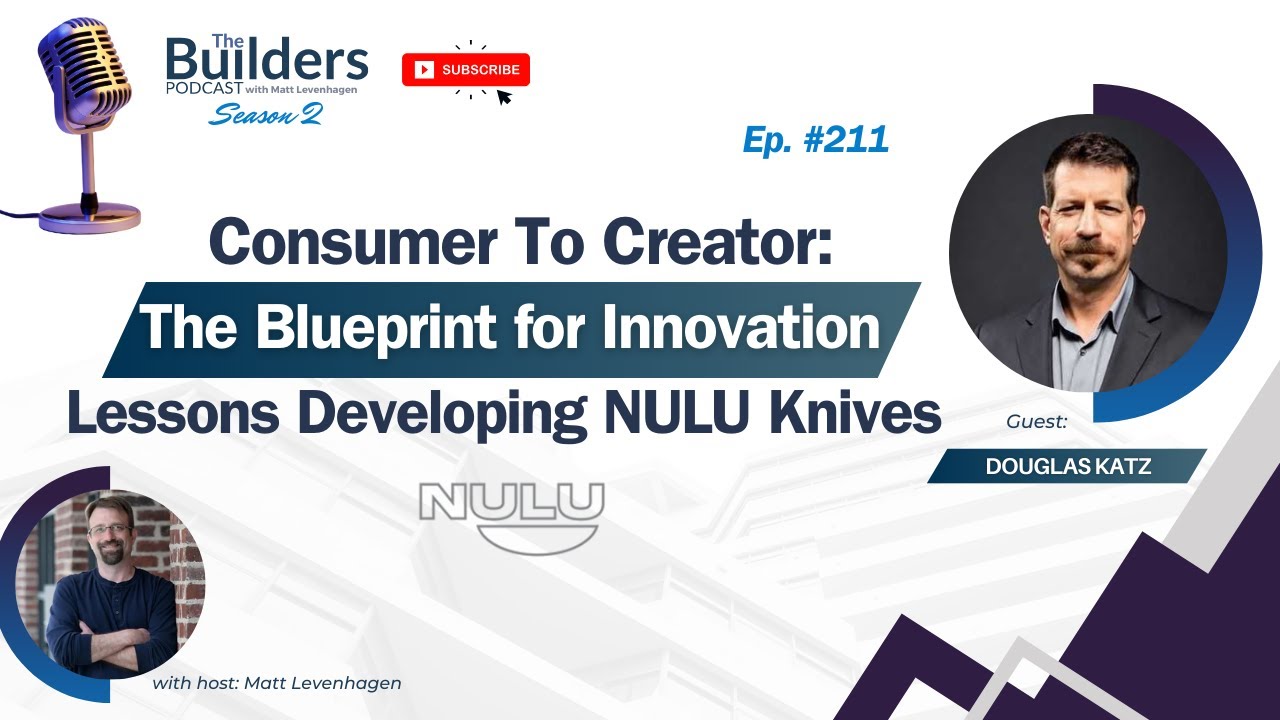
Archimedes in the Think Tank: My Conversation on The Builders Podcast
On the In Medias Res Life, Why Ego Death Is Leadership, and How to Build Your Own Lightning I sat down with Matt Levenhagen on The Builders Podcast — a show dedicated to uncovering the first principles behind building businesses, products, and services — for a conversation that ran a little over an hour and covered ground I don't always get to explore in this depth. Matt is a builder himself (Unified Web Design, Unified Plugins) and asks the kinds of questions you only get fr
dougkatz8
Jul 2018 min read

The Huge Impact of Small Changes: My Conversation on Give A Heck
On Character as Currency, Ego Death as Leadership Strategy, and Why Retirement Is a Slide Toward Irrelevance I sat down with Dwight Heck on the Give A Heck Podcast — a show built around helping people live life on purpose, not by accident — for a wide-ranging hour-plus conversation that started with my origin story and ended somewhere I didn't expect: an argument against retirement as a life goal, and a case for character as the actual currency of leadership. Along the way we
dougkatz8
Jul 2021 min read
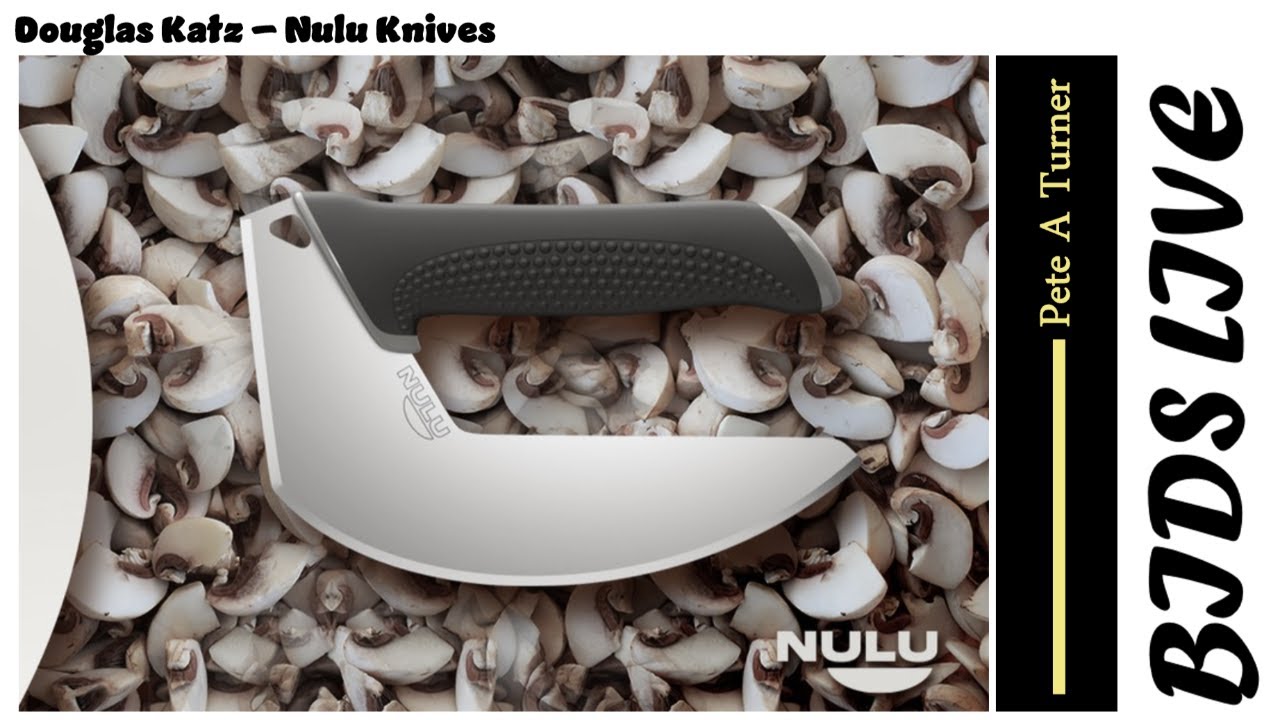
The Huge Impact of Small Improvements: My Conversation on The Break It Down Show
On Military Training as Entrepreneur Training, Why Adaptation Isn't Surrender, and Why Advice Is Just Information I sat down with Peter Turner on The Break It Down Show — a veteran-led interview show with an audience of military entrepreneurs, creators, and adaptive innovators — for a nearly hour-long conversation that felt like two military guys who've been through the corporate wringer comparing notes. We covered everything from the accidental origin of NULU to why the sand
dougkatz8
Jul 2019 min read

Ideation in the Think Tank: My Conversation on the Free Time Mastermind Podcast
On the Science of Where Ideas Come From, Why Storytelling Is the Real Moat, and Regenerative Braking for Aging I sat down with Robert Gaines on the Free Time Mastermind Podcast — a show he built around helping entrepreneurs and inventors — for a wide-ranging conversation that started with red legs and West Point, moved through the biology of ideation, wandered into the crooked economics of the U.S. Patent Office, and ended on a philosophy I've been calling regenerative brakin
dougkatz8
Jul 2016 min read
bottom of page