top of page
Keynotes · Consulting · Advisory | ADHD, Ability, Leadership & Organizational Dynamics
The Variance
On ADHD, Ability, and the World We Move Through
Search

Q&A-DHD: "How Do I Cope With Being Corrected?"
Wrong question. Here's the right one — and a framework that actually holds up. I am headed out to the Blade Show in Atlanta, so I am recording this early. I pulled this question off Reddit this week. “How to cope with intolerance to being corrected or being wrong? I absolutely hate being corrected. It used to make me feel devastated and depressed but nowadays it makes my blood boil — especially if it’s something I’m supposed to be knowledgeable in.” Before I answer it I want
dougkatz8
Jun 25 min read


The Blade That Is Never Finished
Why Managing ADHD Is a Practice, Not a Destination I've been back on the Aikido mat for a few months now. Different school, different style, a lot of relearning. And somewhere in that process — in the awkward, humbling experience of being a beginner again with knowledge I didn't have the first time — something clicked that I think is worth talking about. There's a concept in Aikido and other Japanese martial arts called shugyo. It doesn't translate cleanly into English, and I
dougkatz8
Jun 16 min read
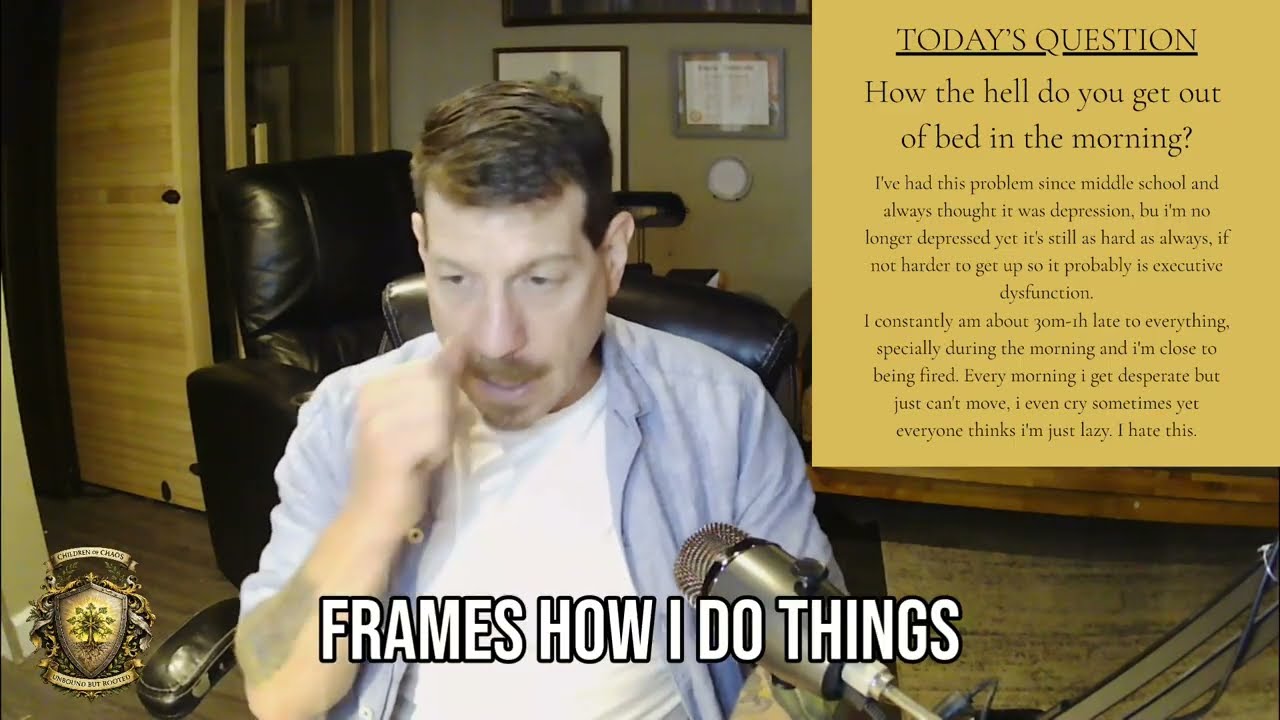
Q&A-DHD: "How the Hell Do I Get Out of Bed in the Morning?
A question pulled straight from Reddit — and an approach that the ADHD community usually won't give you. I pulled this question off Reddit recently. “I constantly am about 30 minutes to an hour late to everything, especially during the morning and I’m close to being fired. Every morning I get desperate and just can’t move. I even cry sometimes yet everyone thinks I’m just lazy.” If this is you — or someone you know — the struggle is real. But the answer most people give isn’t
dougkatz8
May 272 min read


Stop Worrying About the Diagnosis
A label does not change the contents and it will not be answer to everything. I use the word ADHD because it’s the common language. Not because I accept the disorder framework. What I carry doesn’t look like a disorder when I examine it honestly. It looks like a wiring profile — with costs and capabilities attached. The friction isn’t coming from something broken. It’s coming from a mismatch between how I’m built and systems that weren’t built for me. I’m not a clinician. Eve
dougkatz8
May 267 min read

Children of Chaos | Is the ADHD Industrial Complex Keeping You From Success?
I’m Doug Katz, the creator of Children of Chaos. It’s a fairly new venture, but you may have read some of the articles I have out there. I’m publishing here and a couple of other places, and you might see my shares under my other business ventures. I figured it was time to start adding video to what I’m creating — that’s a lot of the currency of how things are done today. Thanks for reading The Children of Chaos! Subscribe for free to receive new posts and support my work. As
dougkatz8
May 193 min read

My Past Appearance on Vet S.O.S. - Operation Start-Up
"You don't solve a problem until it's a problem — until it's an aspirin and not a vitamin." That realization changed the direction of my life more than I understood at the time. Like many people, I spent most of my life identifying as capable. Army service, athletics, business, building, problem-solving — I saw physical capability as normal, stable, and largely permanent. But over time, injuries, wear, surgery, and age began forcing a different conversation. Not all at once.
dougkatz8
May 142 min read
bottom of page