top of page
Keynotes · Consulting · Advisory | ADHD, Ability, Leadership & Organizational Dynamics
The Variance
On ADHD, Ability, and the World We Move Through
Search


The Care Loophole
Why we accept gifts we'd never buy ourselves — and what adaptive-product brands and care-givers can learn from it. When Margaret's daughter set the wrapped box on the kitchen table last spring, Margaret assumed it was another candle. She was seventy-eight, her birthdays had become predictable, and macular degeneration had quietly rearranged what she could still enjoy about them. She hadn't finished a novel in almost a year. She had stopped mentioning it. Inside the box was a
dougkatz8
Jul 177 min read

The Huge Impact of Simple Changes: My Conversation on Impactors Out Loud
On the Ability Curve, Why "Disabled" Isn't a Community, and How Aging Into Disability Is the Conversation Nobody Wants to Have I sat down with Tracy V Allen on Impactors Out Loud for a conversation that ran just under an hour and dug into corners I don't always get to explore — the sub-communities inside "disability," why marketing to disabled people is like marketing to Asia, the family office as the ideal impact investor, aging into disability, and why a friend's line about
dougkatz8
Jul 1715 min read
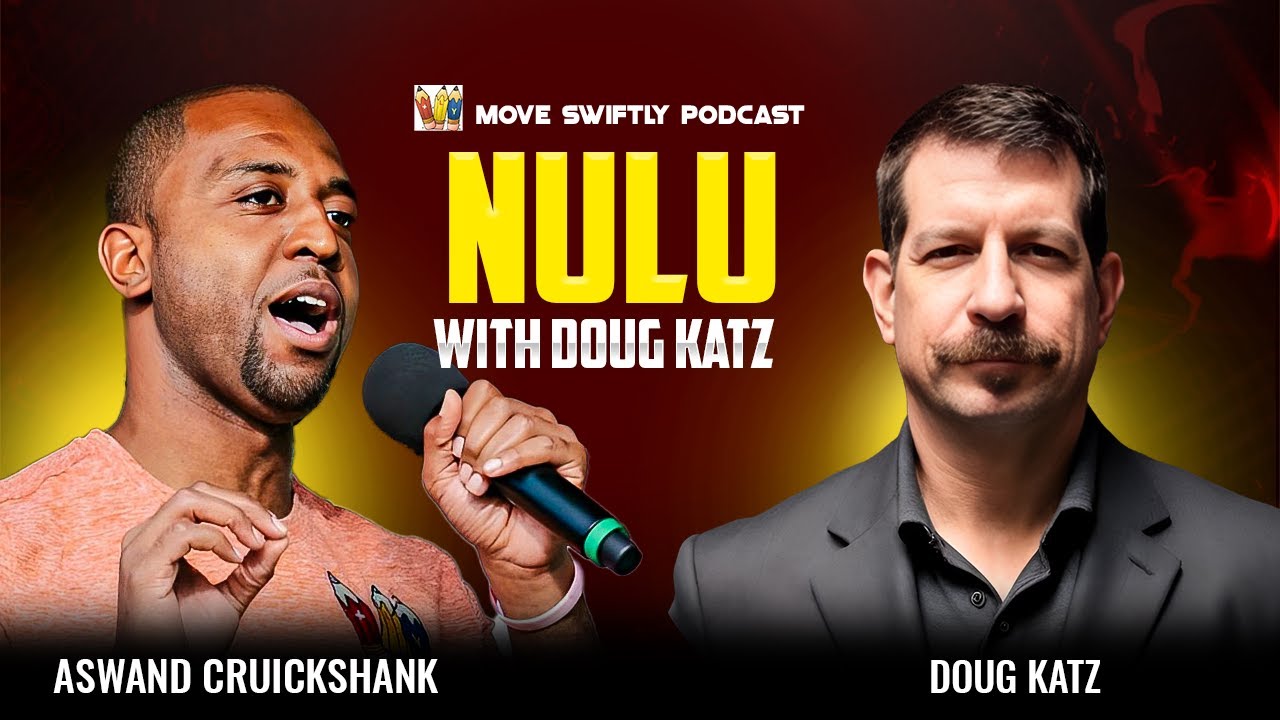
Move Swiftly and Build the Right Team: My Conversation with the Move Swiftly Podcast
On the Agency of Others, Why the Idea Is Only 15%, and How to Stop Being Your Own Worst Enemy I sat down with the Move Swiftly Podcast — a show about innovative teamwork — for a conversation that ran about 50 minutes and went places I didn't expect. We talked about my failed side businesses, why Gen X is the "Pottery Barn generation," why the U.S. patent system is quietly broken, why your success comes down to the agency of others, and why I now believe the idea itself is 15%
dougkatz8
Jul 1616 min read

Inclusion Is a Curve, Not a Category: My Conversation with Aaron DeVries on The Inclusive Dad Podcast
On the Ability Curve, Why "Adaptive" Costs Too Much, and How Kids in the Kitchen Might Be the Ones Who Finally Change the Culture I sat down with Aaron DeVries on The Inclusive Dad Podcast for a conversation that started with the question I most like being asked — what is your definition of inclusion? — and ended somewhere I didn't expect: talking about the psychology of walkers, the "gray tsunami," why 3D printers matter, and whether I'd ever eaten Spam. It ran about 42 minu
dougkatz8
Jul 1612 min read


When Chopping Hurts: Why Traditional Kitchen Knives Fail People with Arthritis
Part 1 of a 2-part series on adaptive cutting solutions for arthritis and reduced grip strength If you have arthritis and you've started dreading meal prep, you're not imagining things — and you're not alone. For the roughly 54 million American adults living with arthritis — including osteoarthritis, rheumatoid arthritis, and psoriatic arthritis — the humble kitchen knife has become one of the most surprisingly hostile tools in the home. Not because your hands are failing you
dougkatz8
Jul 159 min read

My Appearance on Entrepreneur's Enigma with Seth Goldstein
I sat down for a conversation recently on the Entrepreneurs Enigma Podcast with Seth Goldstein about NULU, about the artillery officer's approach to problem-solving, about why adaptive design is just smart design, and about the actuarial tables that shape how I think about time now. There's a lot in there — some of it about the product, some of it about how a counterfire officer ends up inventing a kitchen knife thirty years later, some of it about why the venture capital wor
dougkatz8
Jul 146 min read
bottom of page